|
Click pictures for a larger version.




|
|
Ruger, now the largest firearms manufacturer in America, has a storied history that began in
1946, when William Ruger and Alexander Sturm took out their first patents. In 1949, they created their first unique firearm, the Ruger Standard .22 pistol, which was reminiscent of the German Luger or perhaps the Japanese Nambu. Ironically, my first pistol was an RST-4, the model which rocketed their products in the view of the American shooting culture.
Other firearms followed to cement the company's position as an innovative and reliable company. The Single Six and Blackhawks and later the Ruger Bearcat, fed the country's interest in western-style guns that were the rage due to the popularity of cowboy movies and TV shows of that era. And, of course, the Introduction of the 10/22 rifle in 1964, the most popular .22 rifle in America for years, solidified Ruger's place as a solid American company taking care of our firearms needs.
However, as interesting as all of the early Ruger products were, essentially they were working guns and while several had distinct niches, like the Old Model Blackhawk, there wasn't a truly unique, class-of its-own, head-turner in the line until Ruger brought out the No. 1 in 1966. Interestingly, Ruger refers to the rifle as the No. 1, not a Number One. This was to denote that it was Bill Ruger's personal favorite at the time.
Bill Ruger was a bit of a Renaissance man and loved classic cars and guns, one being the British Farquharson stalking rifle. In fact, the working name for this project was The Victorian because of this gun's influence. While being very graceful, classical and similar in appearance, the Farquharson and No. 1 are not the same action. The first No. 1 was introduced in .308 with a twenty-six inch barrel and the line became extremely popular, being offered in a myriad of variations and calibers for decades to come. For whatever reason, regular production ended in
2013. However, this gorgeous and practical sporting rifle was not ready to disappear quietly and the distributor Lipsey's of Baton Rouge breathed life into this classic design. Lipsey's has been a firearms distributor since 1953 and is known for bringing out limited runs of firearms that feed the gun culture's interest. The company's collaborations with Ruger initiated in the
90's and the first collaboration on the No. 1 was in 2003.
The driving force behind these limited runs is Jason Cloessner, Senior Vice President of Product Development. Jason knows the intricacies of firearm development, design, production and marketing. More importantly, Jason has the pulse of the shooting public and an uncanny ability of giving it what it wants, even after the big name companies have dropped once popular models. I'm sure that there's quite a bit of diplomacy involved in having gun companies recreate and update certain models to fill those voids that true gun people want filled. Undoubtedly, it must be a daunting and expensive proposition.
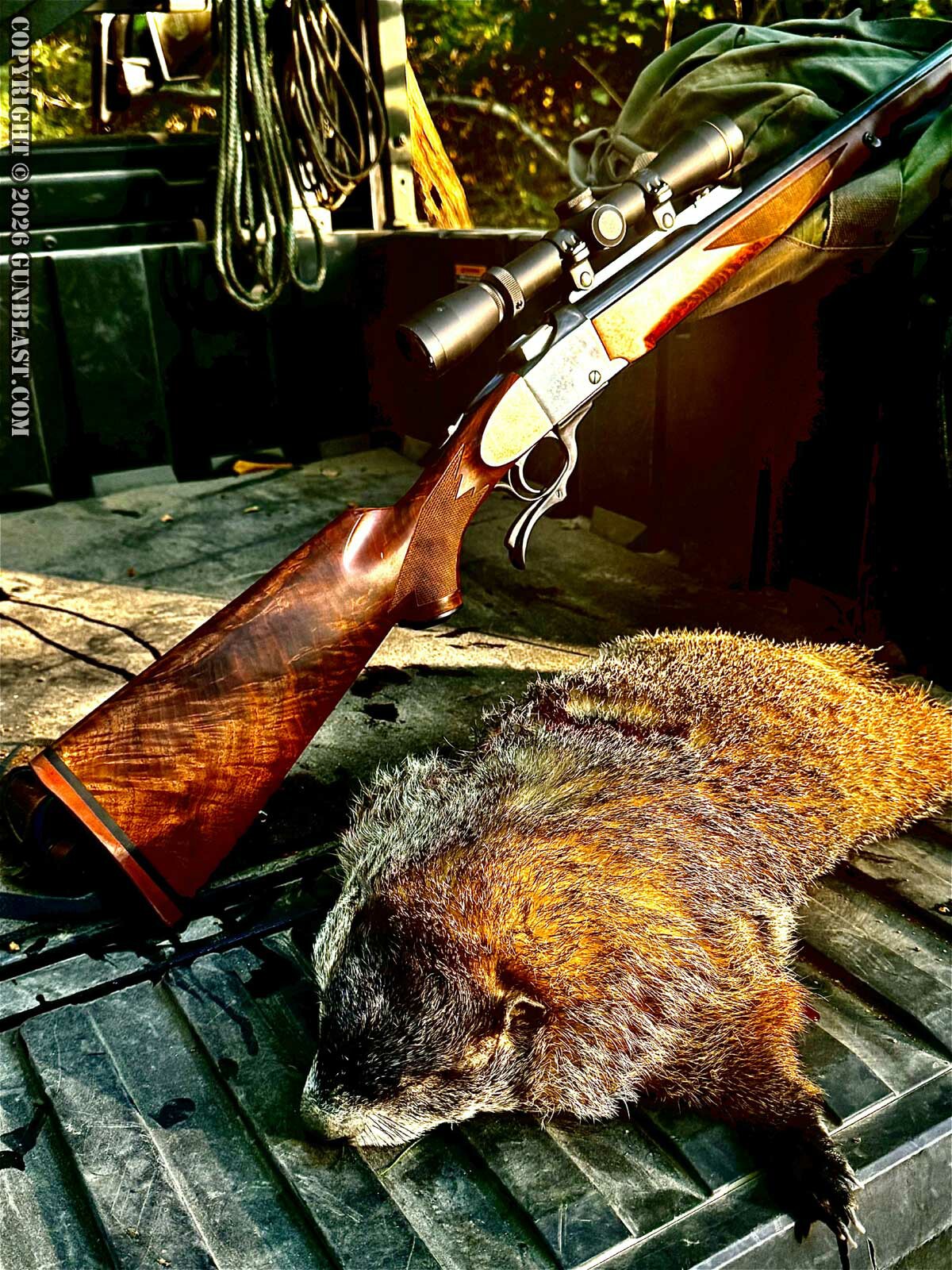
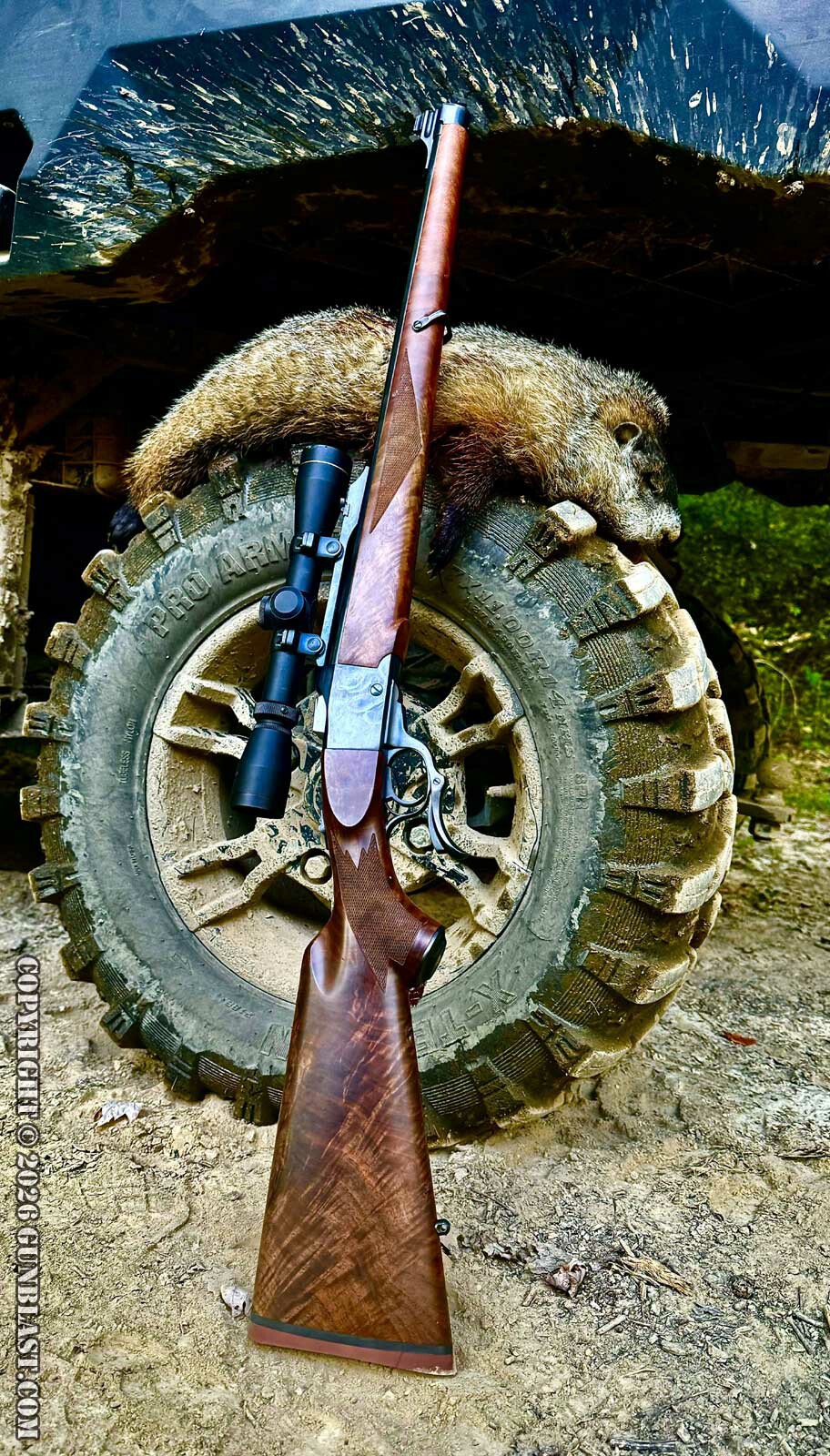
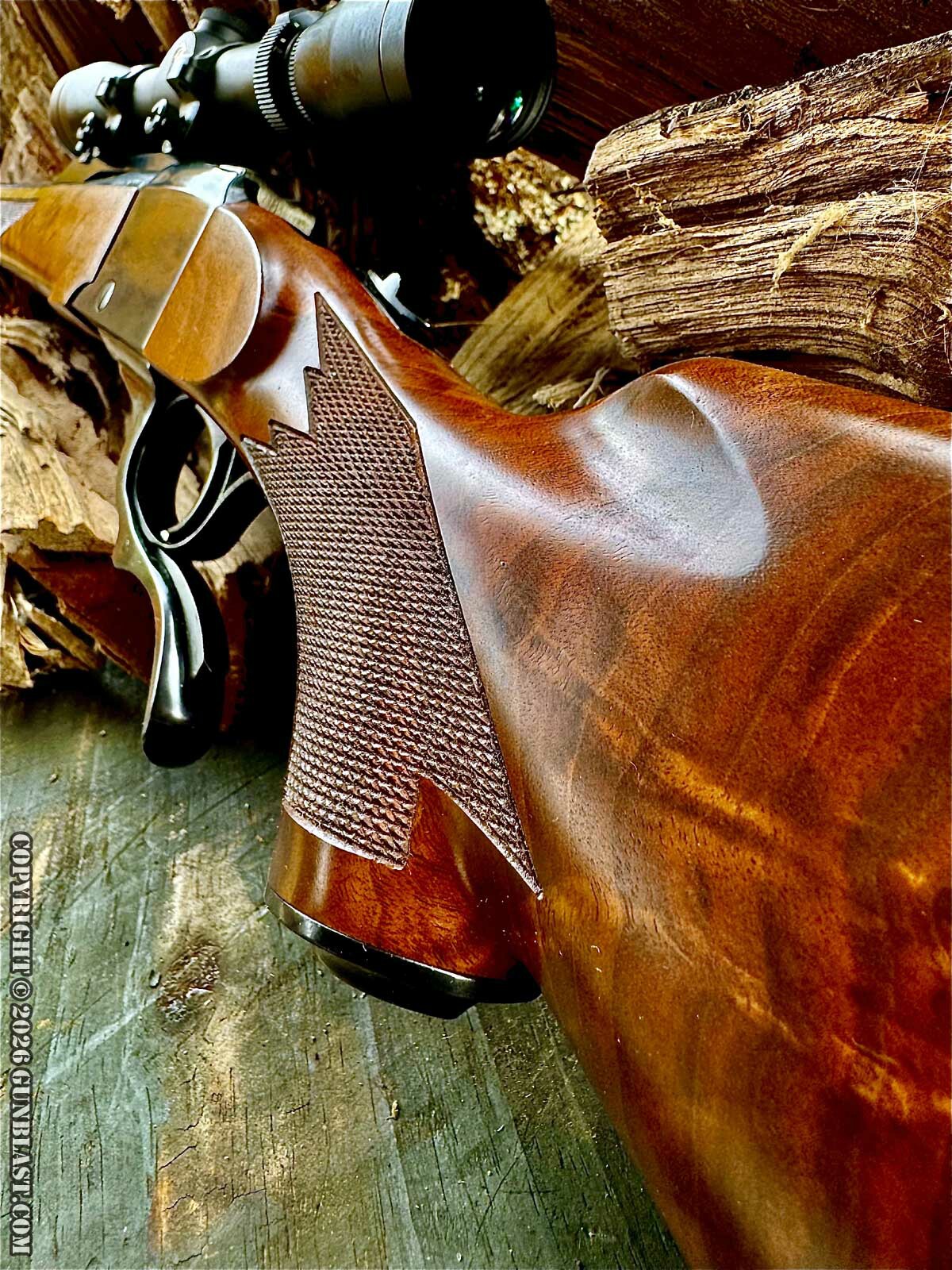
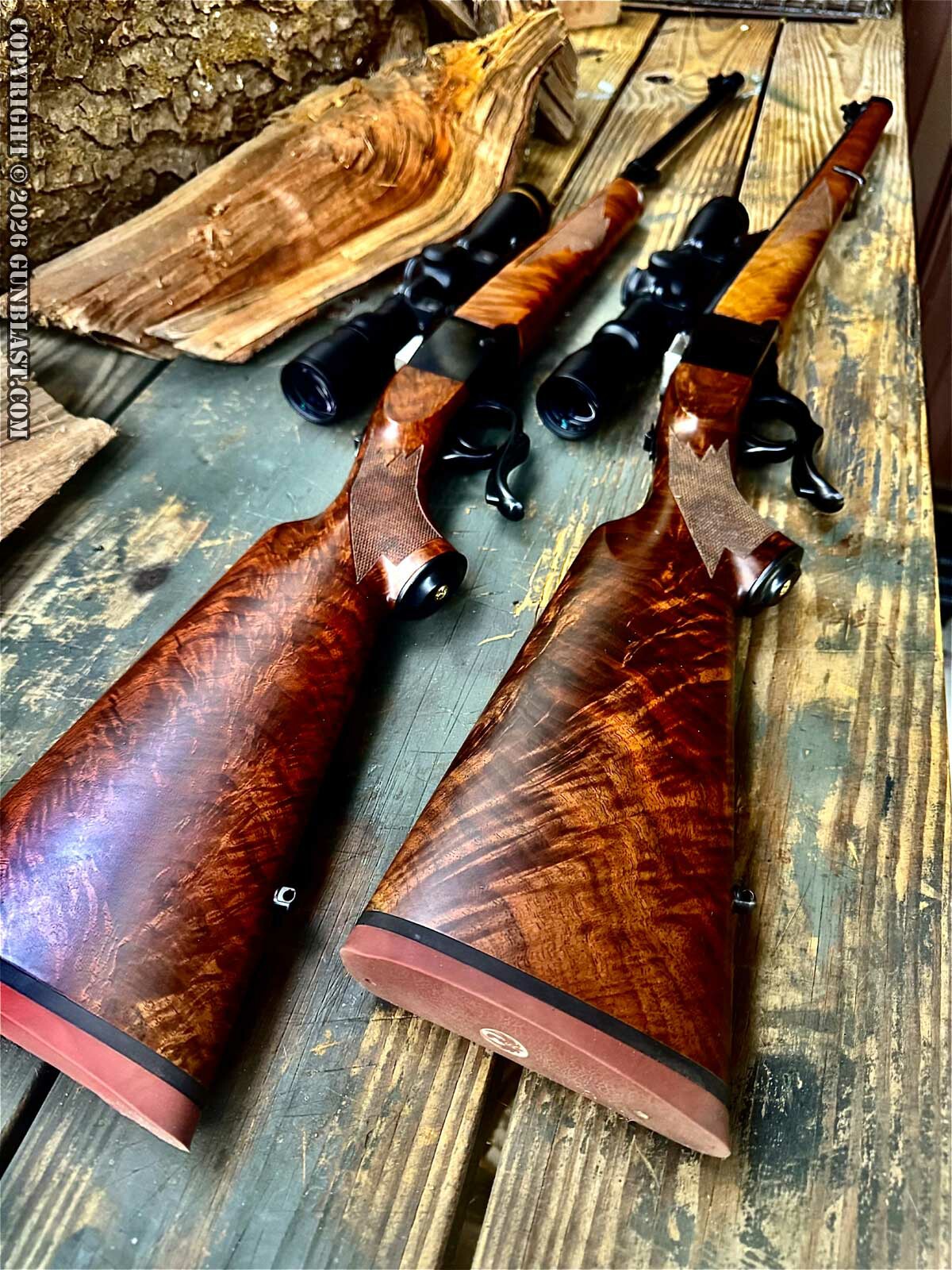
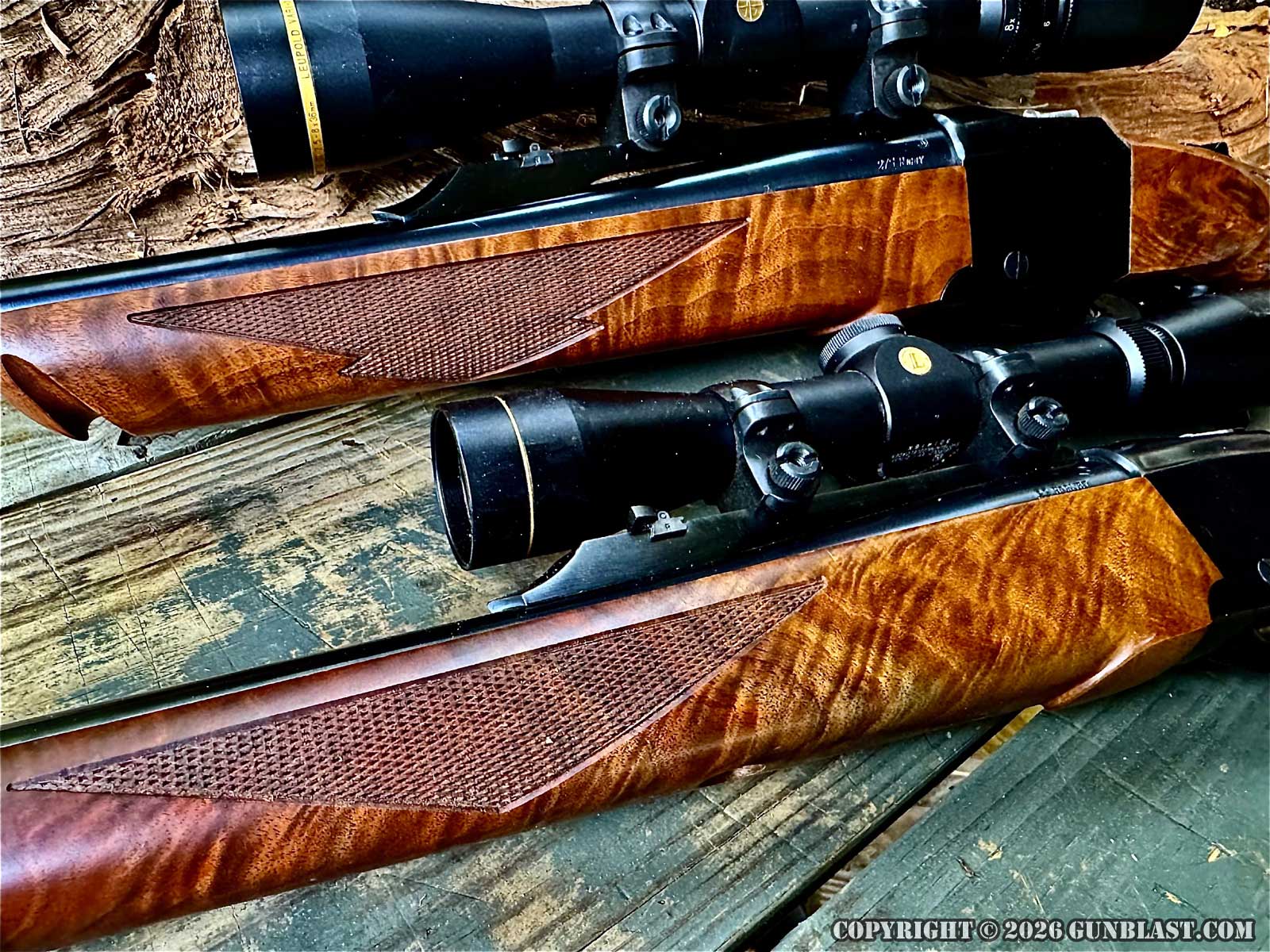
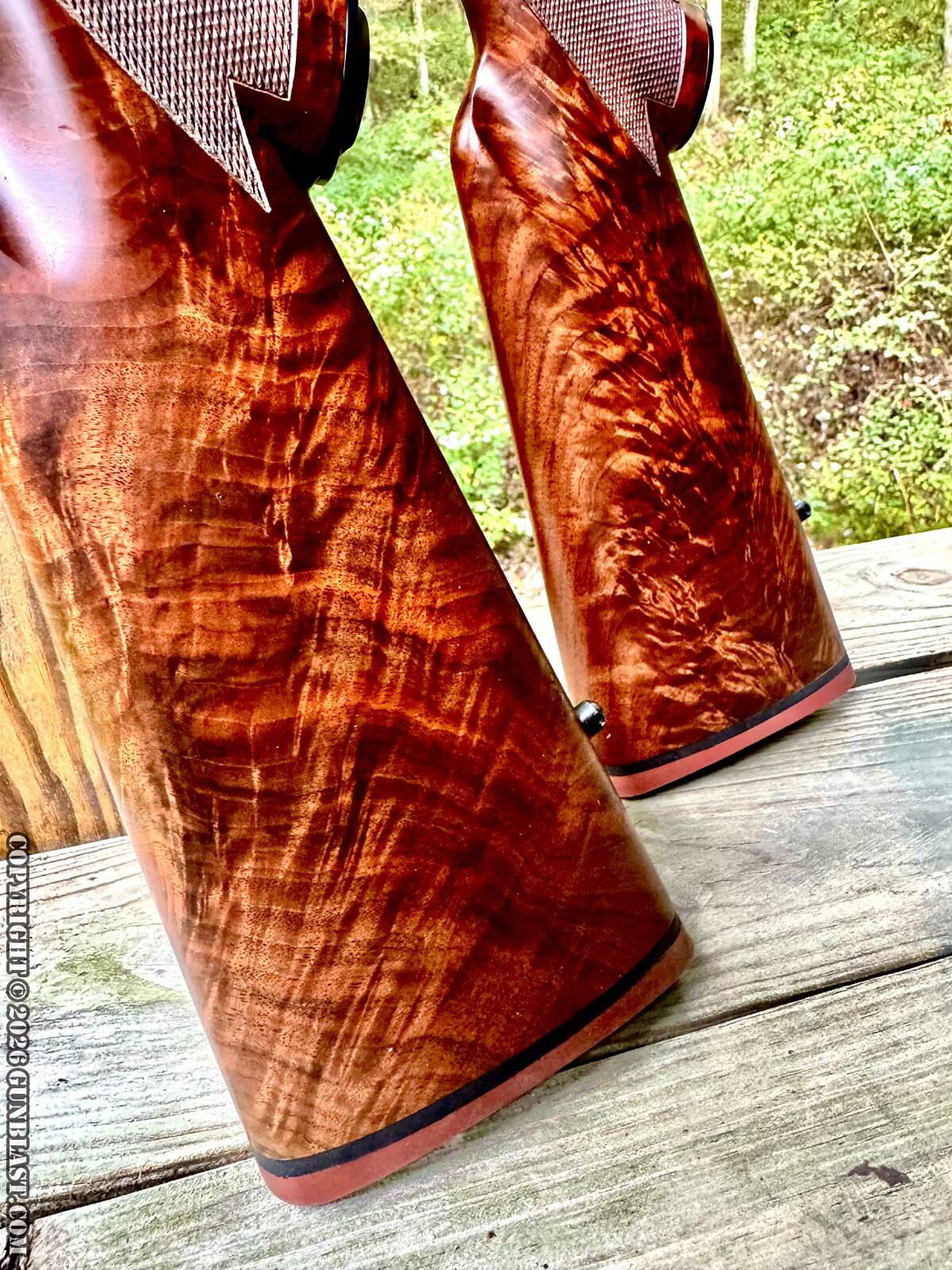
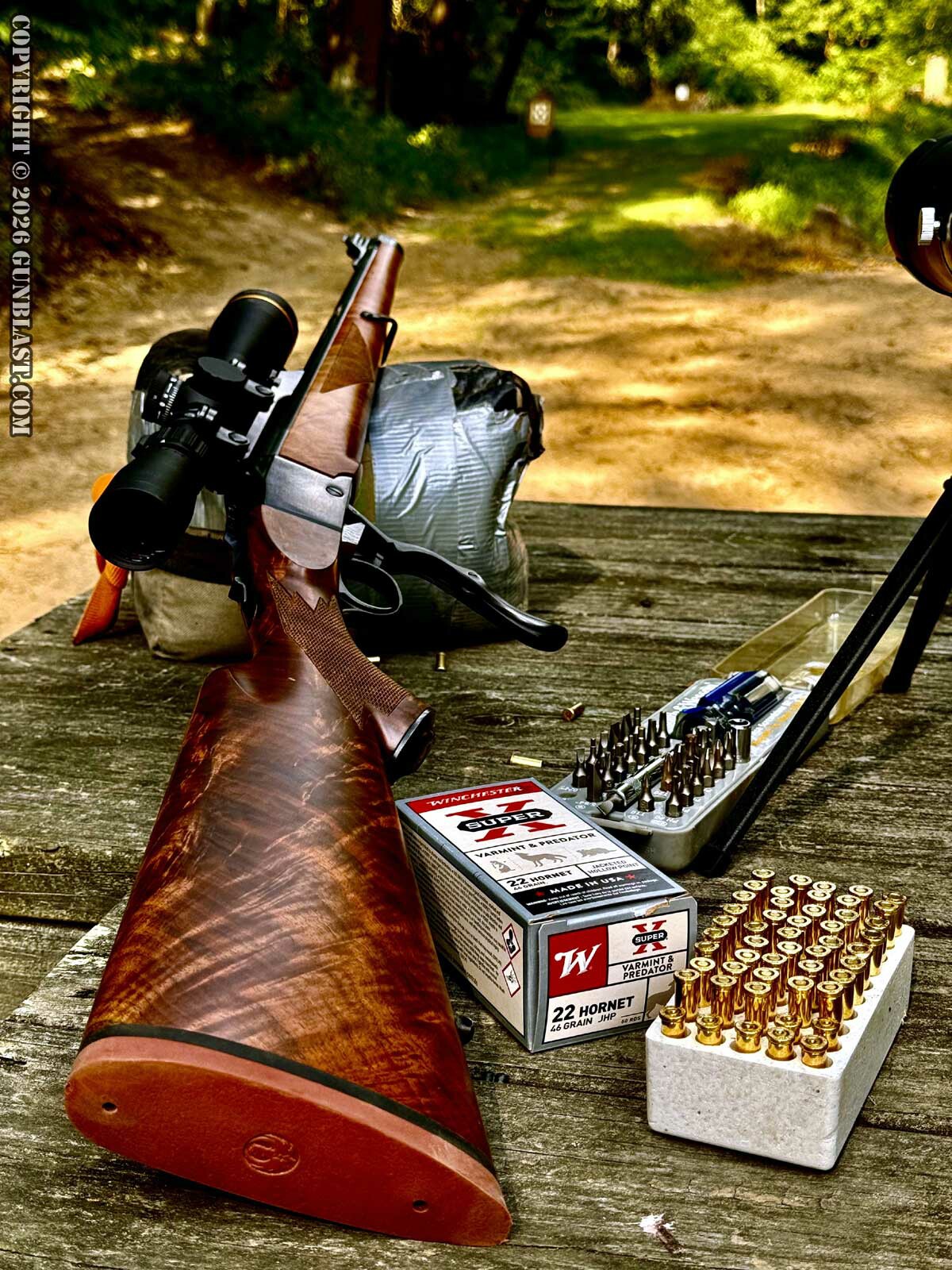
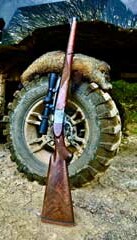
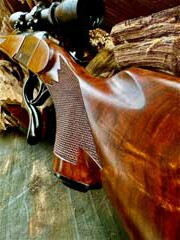
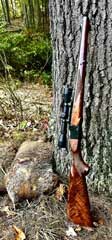
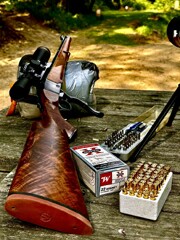
One such collaboration is Lipsey's Ruger No. 1 International in .22 Hornet. In Ruger's parlance, this model is an RSI or International, indicating that it's equipped with a Mannlicher stock. It has a blued finish and the wood is near exhibition quality on both butt stock and forearm, which is rather uncommon for two piece stocks. It has a twenty inch barrel that makes it very handy. I like keeping my rifles slung in African Carry mode, with the rifle on my left shoulder
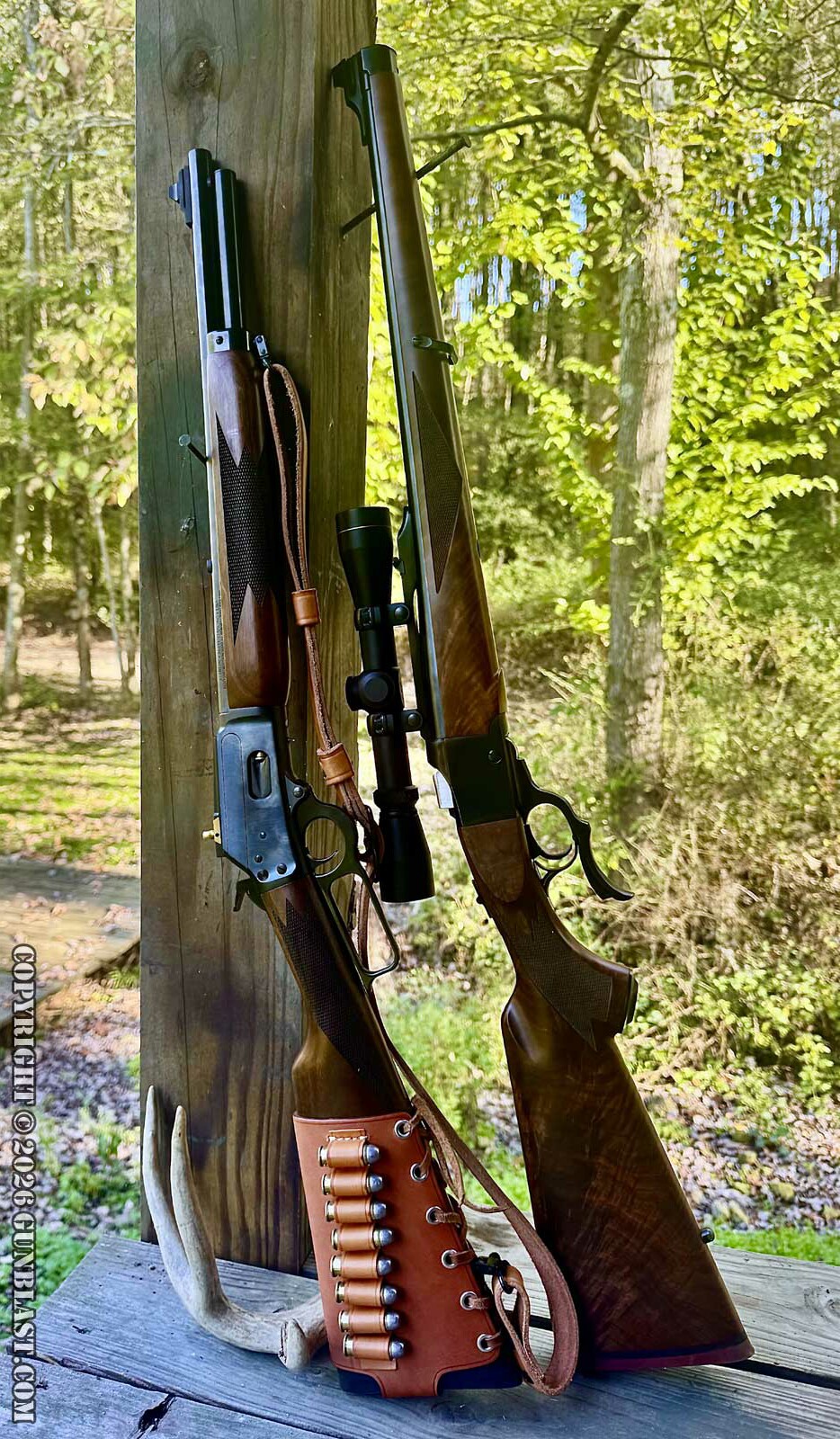
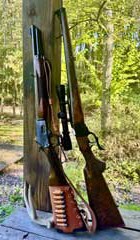
(non-dominant side in my case) muzzle down. It's quick to get into a firing position and the short, 20" barrel is less likely to hang up on brush than a longer barreled rifle would. The shortin- length, falling block action makes this rifle appreciably shorter than a bolt gun with a twenty inch barrel. Note the accompanying photo the No. 1 standing next to a Marlin sixteen inch Trapper, with not much difference in overall length.. it's truly handy without losing velocity like it would if its barrel were shorter.
This rifle embodies the old phrase about something being more than the sum of its parts. It's so aesthetically pleasing that it begs to be picked up and shouldered. A big part is the Mannlicher stock, which exudes a decidedly European flavor. Initially, I had some trepidation about the accuracy of the rifle, worried that the extra length of the forearm was likely to contact the barrel and affect its harmonic vibrations. Fortunately, this was not the case.
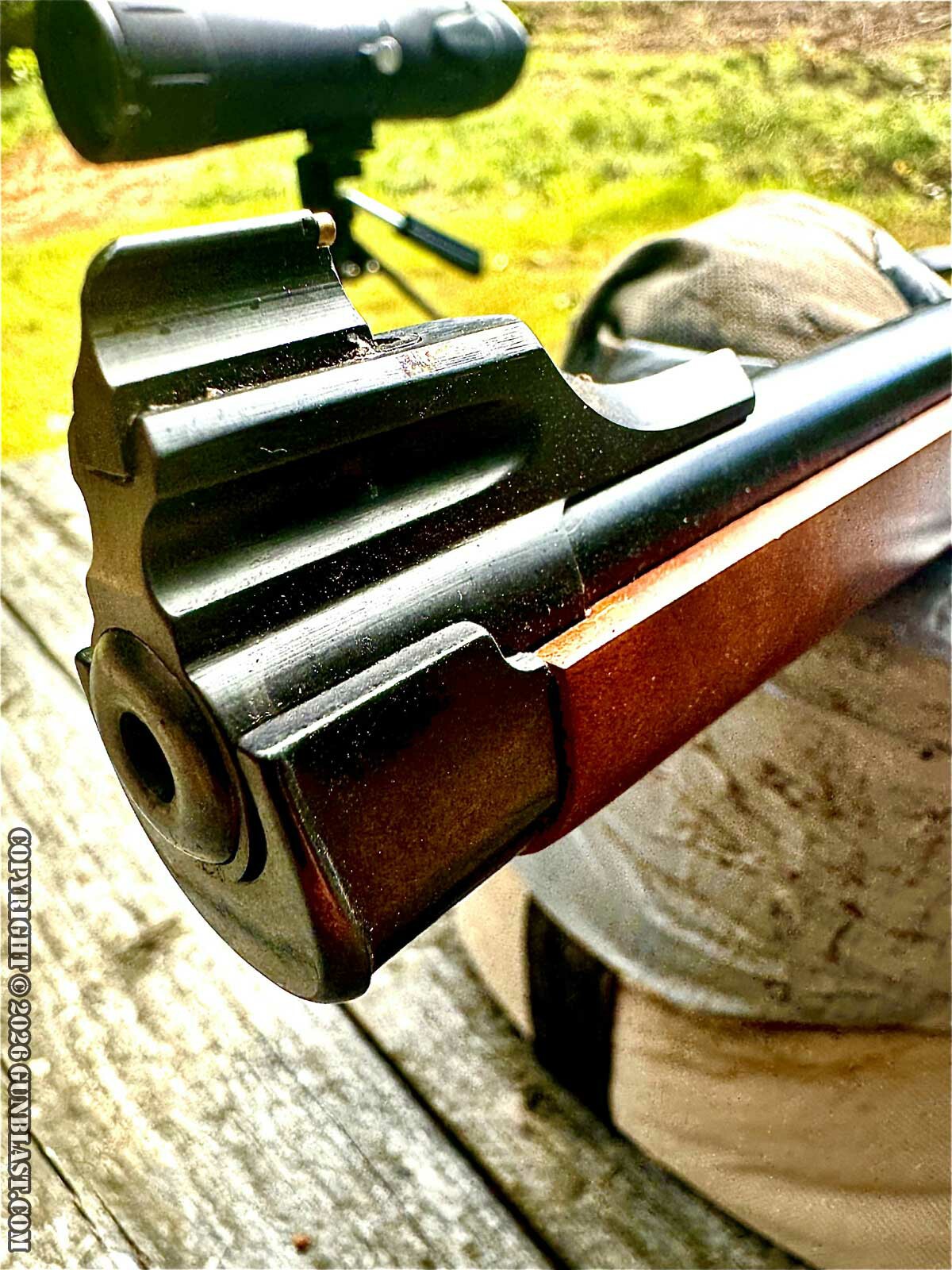
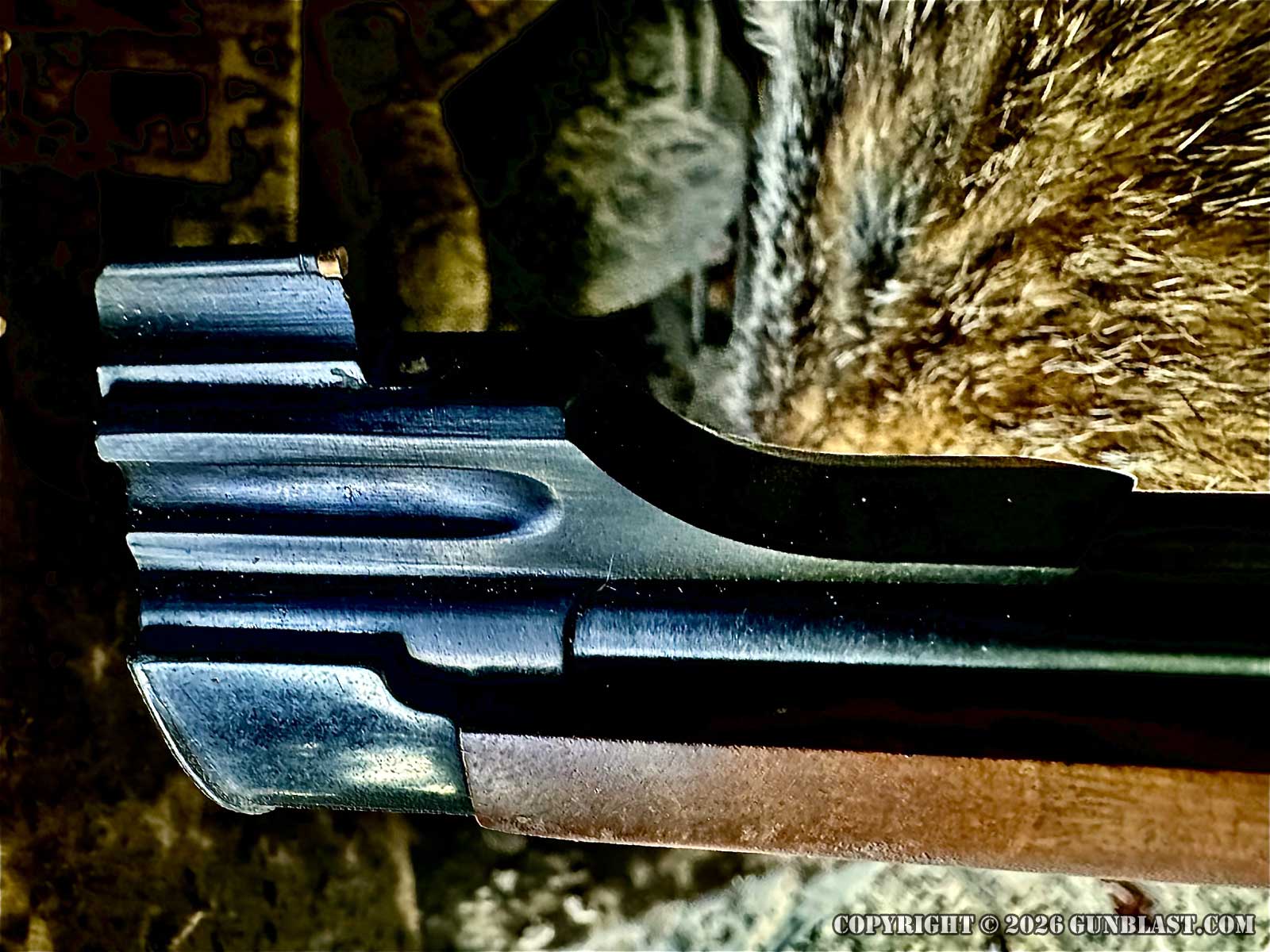
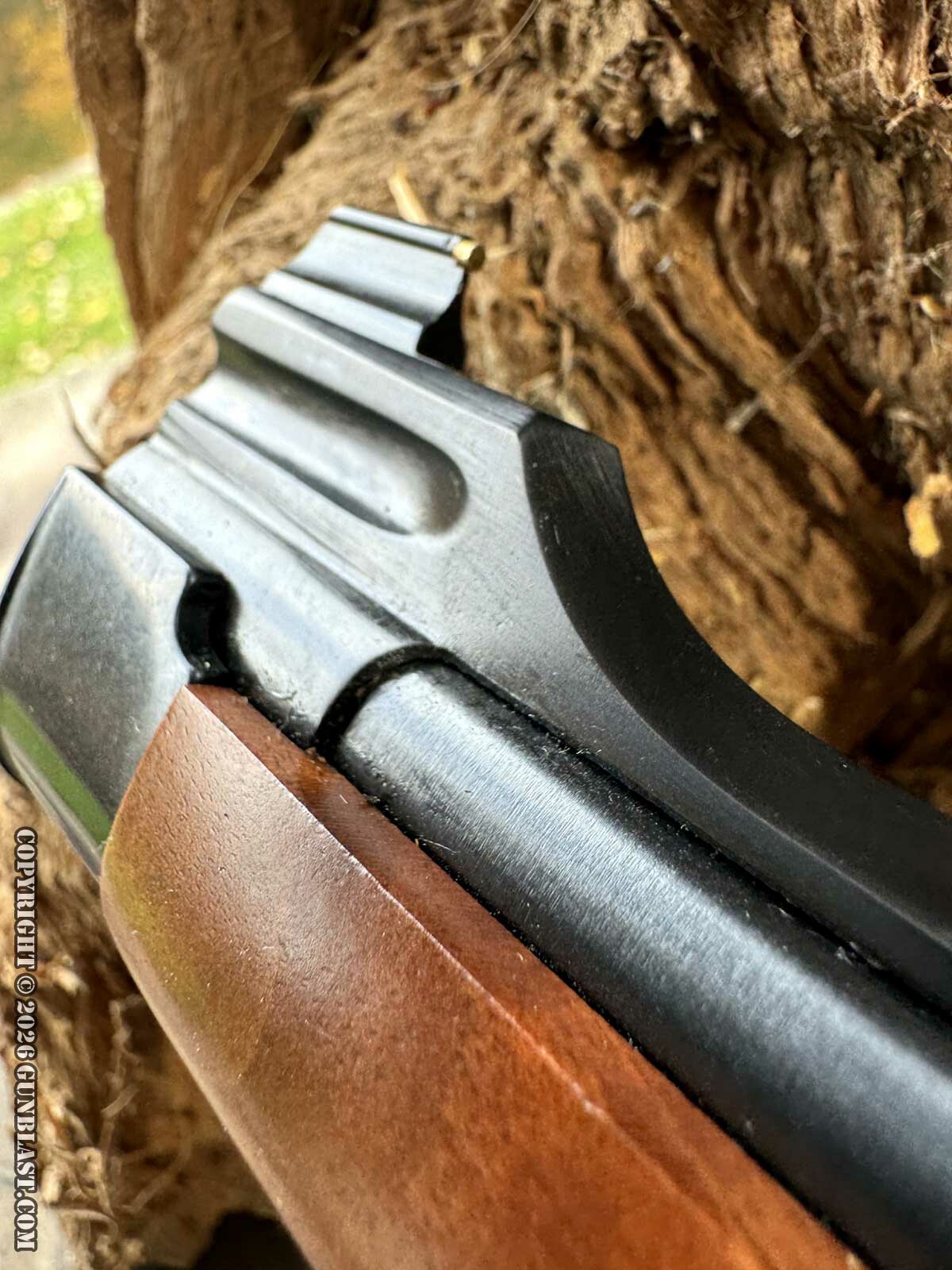
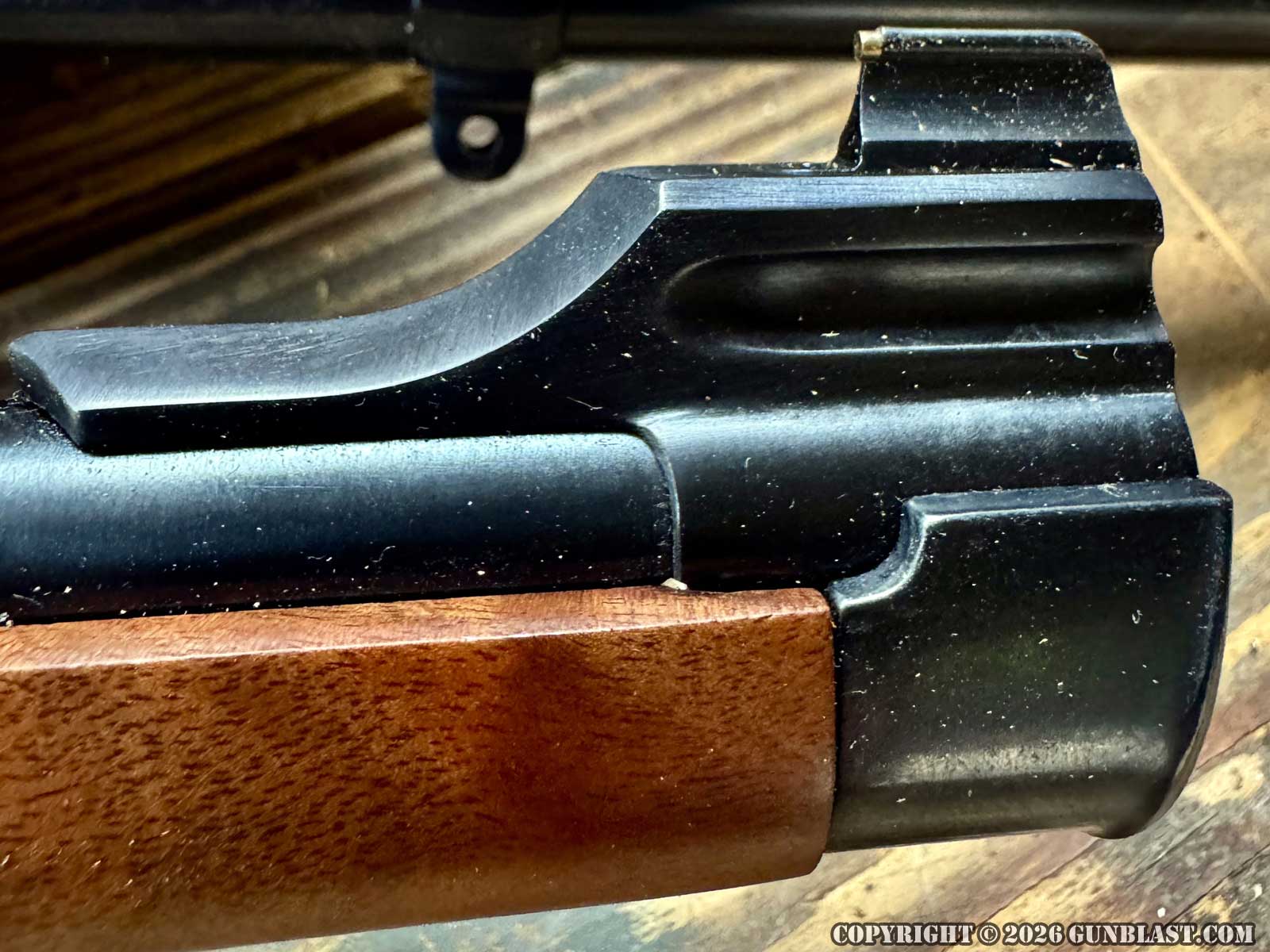
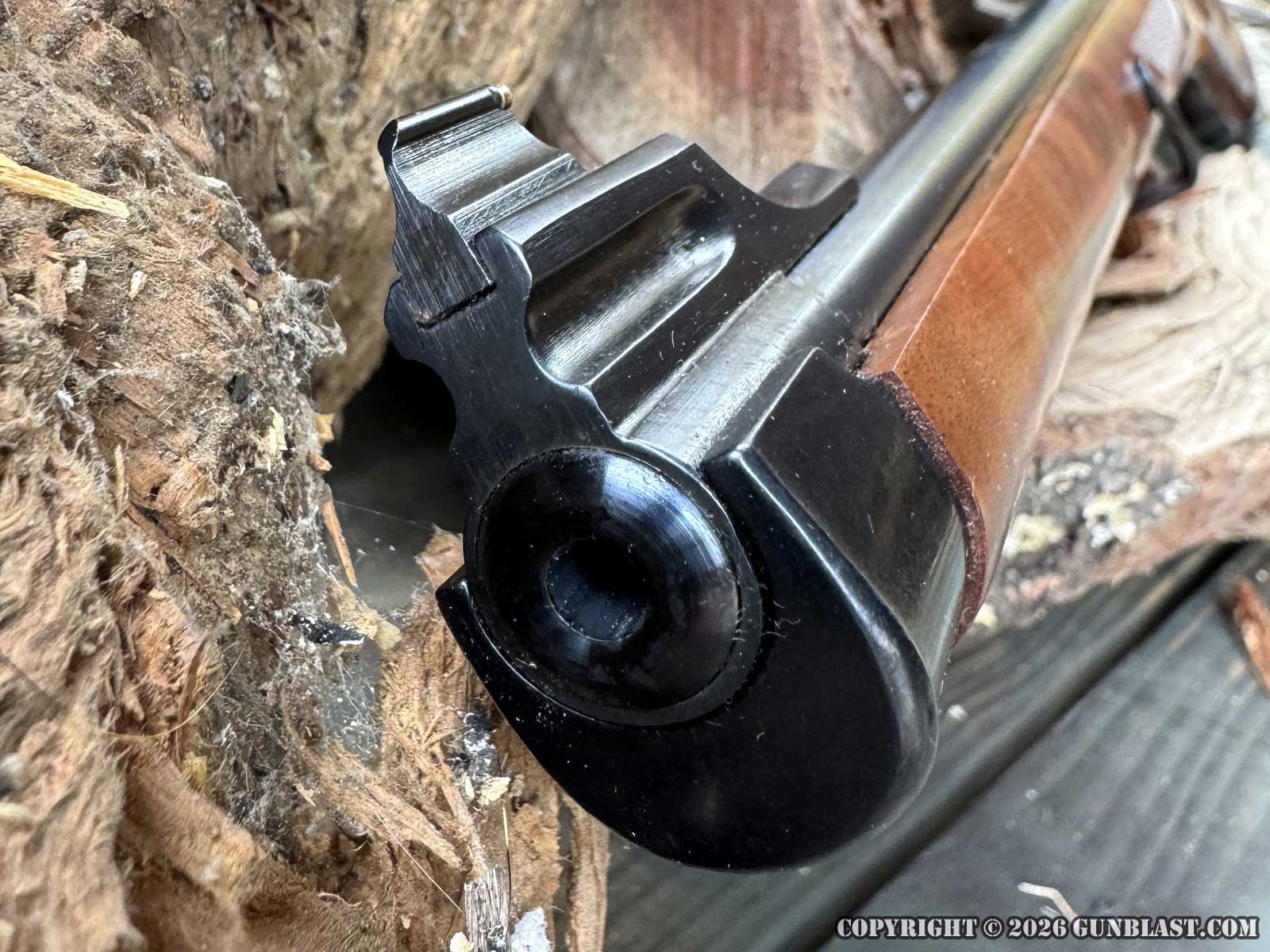
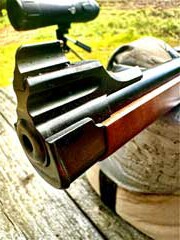
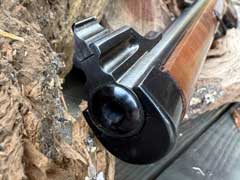
Yet another distinctive feature that makes this No. 1 special is the handsome, blued steel Schnabel fore end cap and how it seems to merge with the ramped front sight. While a rounded or squared off end cap could have been used, the Schnabel end cap is sculpted for an artistic effect that goes way beyond being utilitarian. The sculpted base of the gold-beaded ramp front sight completes the package.
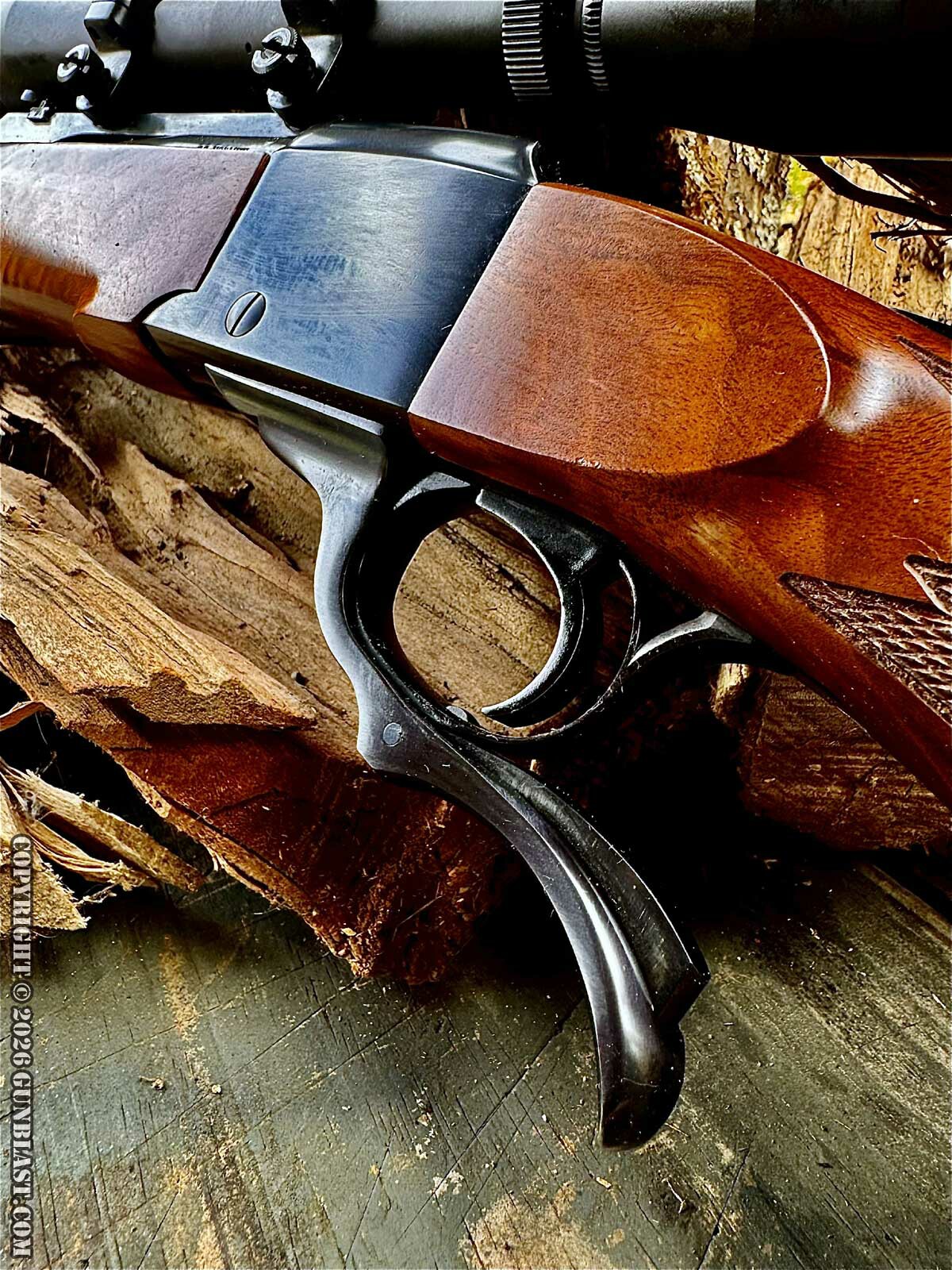
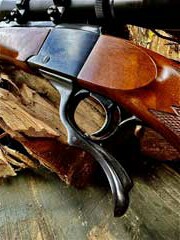
Two additional features adding to the rifle's visual appeal are the quarter rib with its rear sight and integral scope mounting base and the action release lever. The lines of the former match the sculpted design of the front sight base. Rather than being simple a piece of steel, it is arched over the barrel and action and not just slapped onto the barrel. The pleasing curve of the action release lever adds to the effect.
The .22 Hornet is a classic round, being the first smokeless powder varmint cartridge produced by a factory, in 1930. Being based on the black powder .22 Winchester Centerfire or .22 WCF, smokeless powder truly brought it to life, increasing velocity from about
1500 to 2400 fps. With excellent accuracy, negligible recoil and a relatively low sound signature, it was very popular until displaced by the .222 years later. It was also used by the military in survival rifles.
In getting my No. 1 ready for the range and field, I decided to scope it with a much-used, Leupold Vari-X III 2-7x32 that I took off a Remington Mountain Rifle in 7-08, which I had last used in South Africa in 2019. One of my pet peeves with scoping rifles is when owners "overscope" their favorite blaster. It seems de rigeur these days to put a 15-60x60 Premium Stellar MoonGazer on anything with a rifled barrel, even flat, short and handy brush guns. Such mountings not only aren't necessary, they destroy the balance of the rifle, especially compact models like this No. 1.
The Leupold 2-7x 32 is fairly compact and proportionally complements the rifle both visually and the ballistics of the chambering. Essentially, the Hornet is a 200 yard round when used on varmints like ground hogs and 7x is just fine for that. Using the high rings that came with the gun, I felt that that the scope was way too high above the barrel and I resembled a prairie dog popping out of its hole when I raised my head to search for the reticle. Substituting medium Ruger factory rings, I could get a good cheek weld and the crosshairs were exactly where they should be when mounting the rifle.
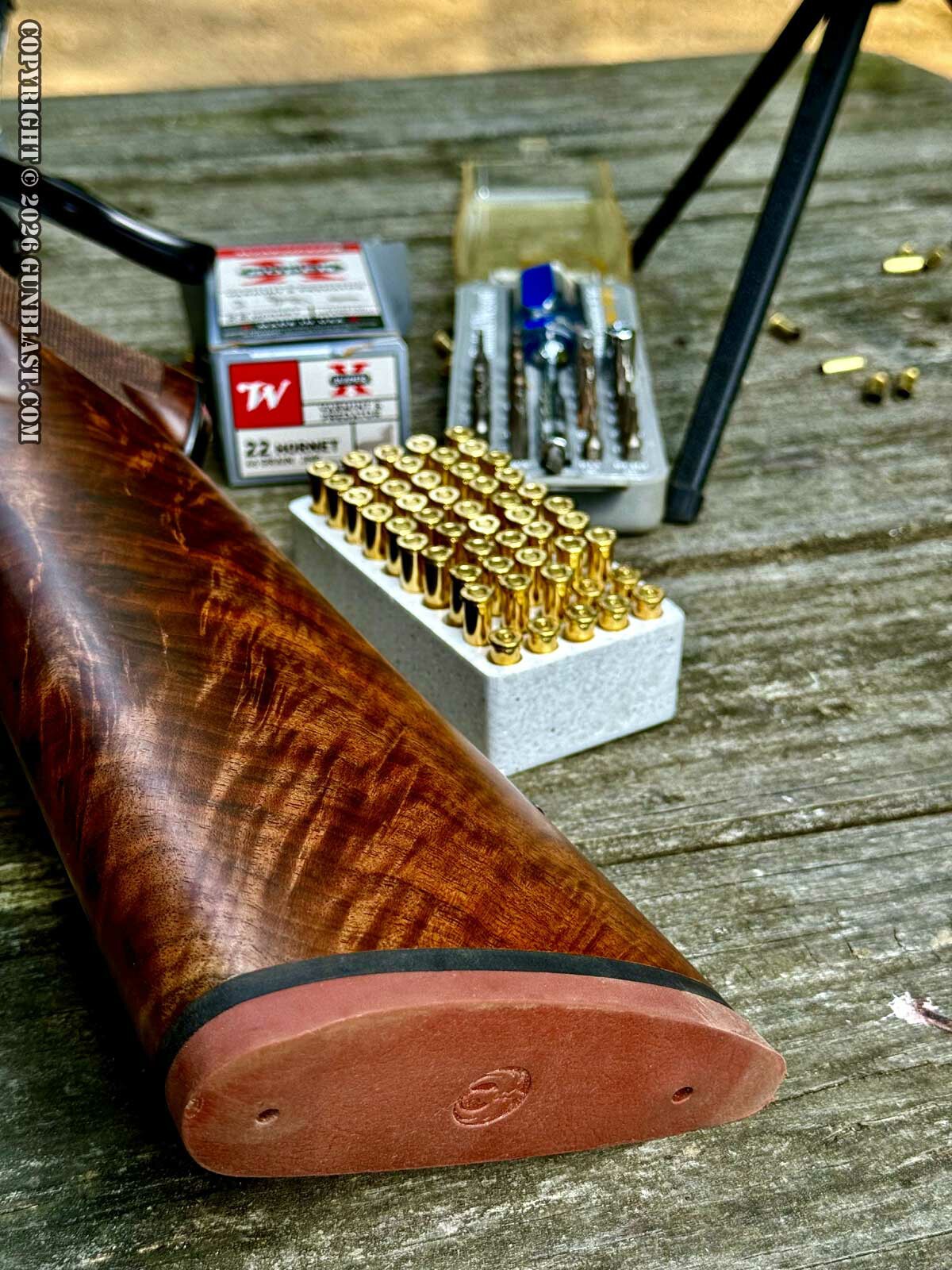
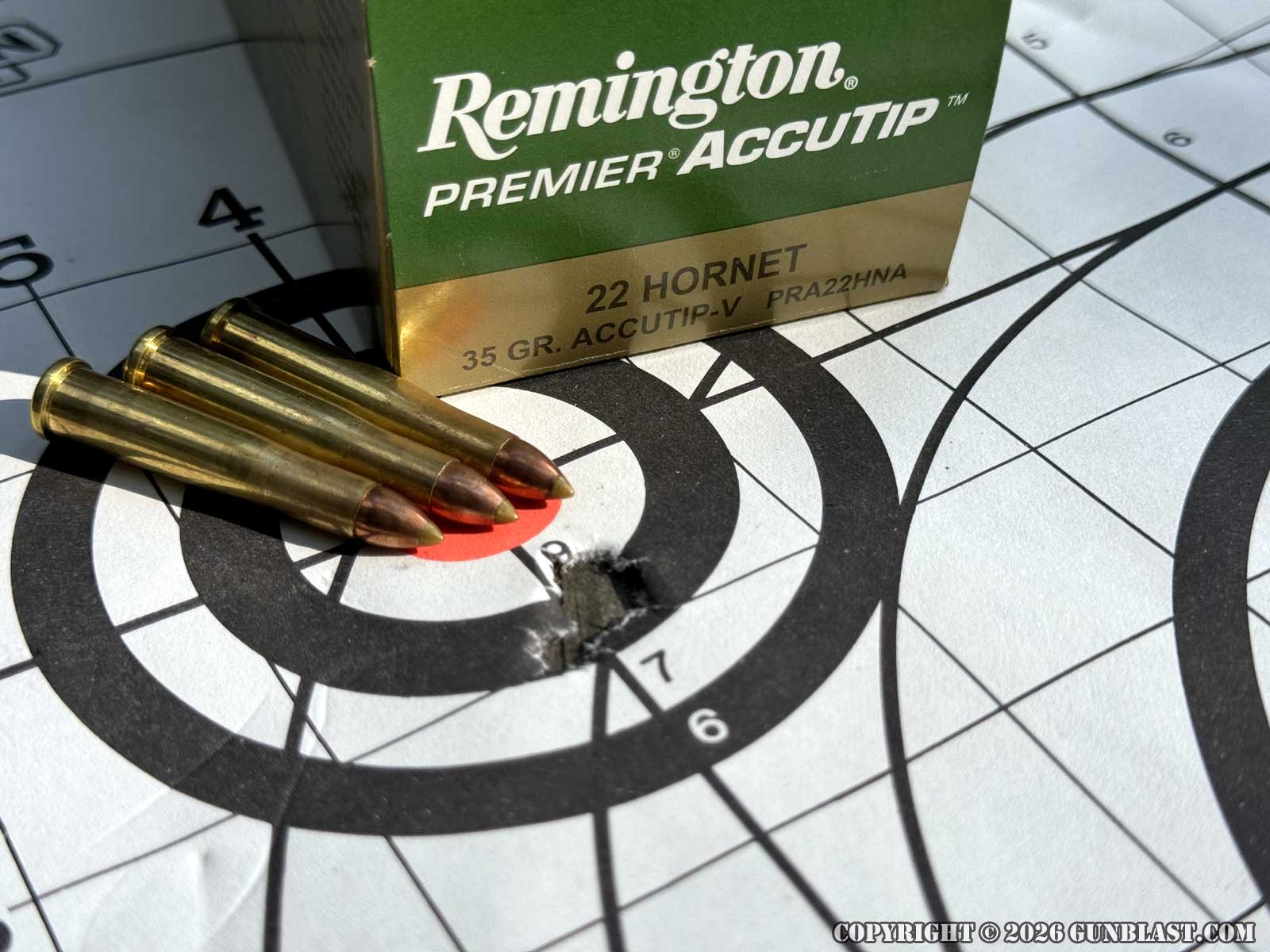
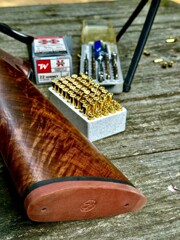
Range Time. Living in rural Ohio in a wooded valley, shooting on our own property is not a problem and we have shooting range where we can do so safely. Hornet ammo was hard to find at the time, but I was able to acquire both Winchester and Remington offerings. The former was a 46 grain hollow point load at 2690 per factory specs and the latter was a 35 grain AccuTip stepping out at a respectable 3100 fps according to Remington. This is knocking on the door of the .223, but with a slightly lighter bullet.
Getting on paper at fifty yards wasn't a problem and I then settled in on sandbags on the 100 yard bench. With the scope set on 7x, I fired multiple three round groups with very respectable accuracy. The Winchester offering averaged 1.25 inches and the hotter Remington AccuTips was only .75 inches! The trigger of my No. 1 is right at four pounds and breaks cleanly, but I feel with a little trigger work the groups would shrink a bit.
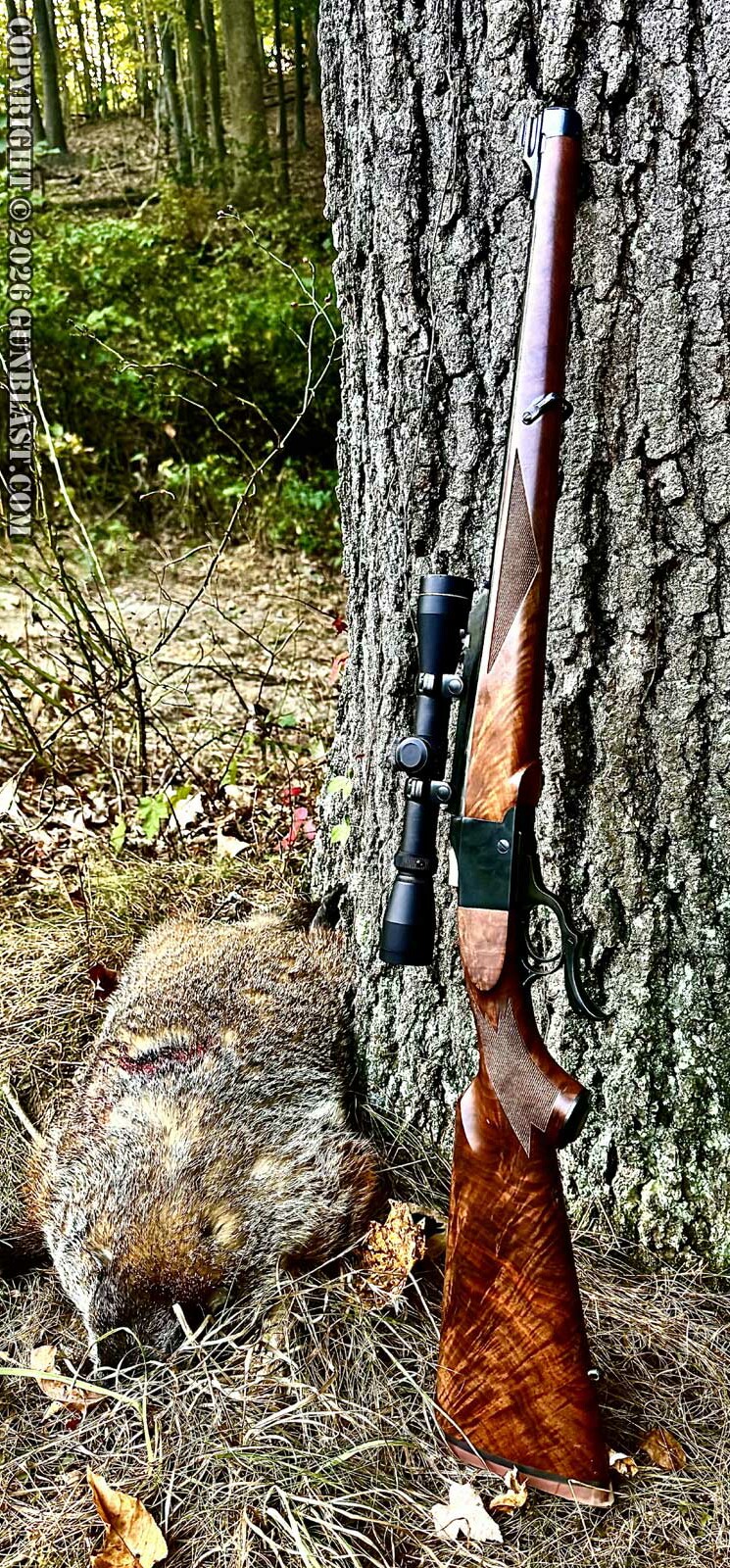
In the Field. Living smack in the middle of farmland, groundhogs are a problem for farmers and the primary target of varmint hunters. I sighted the 35 grain Remington ammo a couple inches high at 100 yards, which put me close to dead on at 200 yards. I've killed a couple dozen groundhogs within that distance, confirmed by a laser rangefinder. All were one shot kills that dropped right there. One afternoon, I gave into temptation and dropped one at 227 yards. The crazy thing was that about five minutes after the kill, a bald eagle dropped out of the sky, snatched it off the ground and headed for trees bordering the field where its huge nest was located.
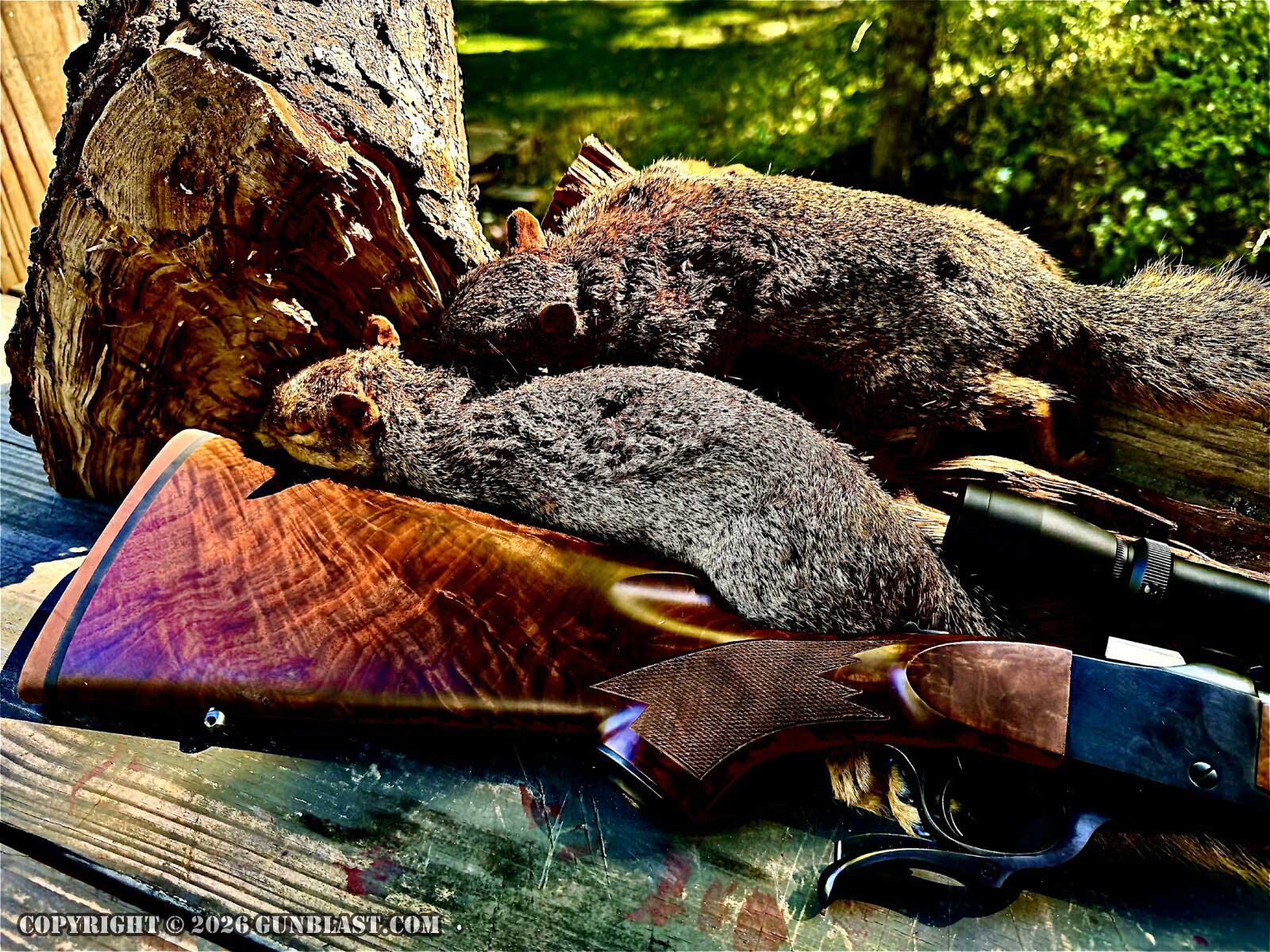
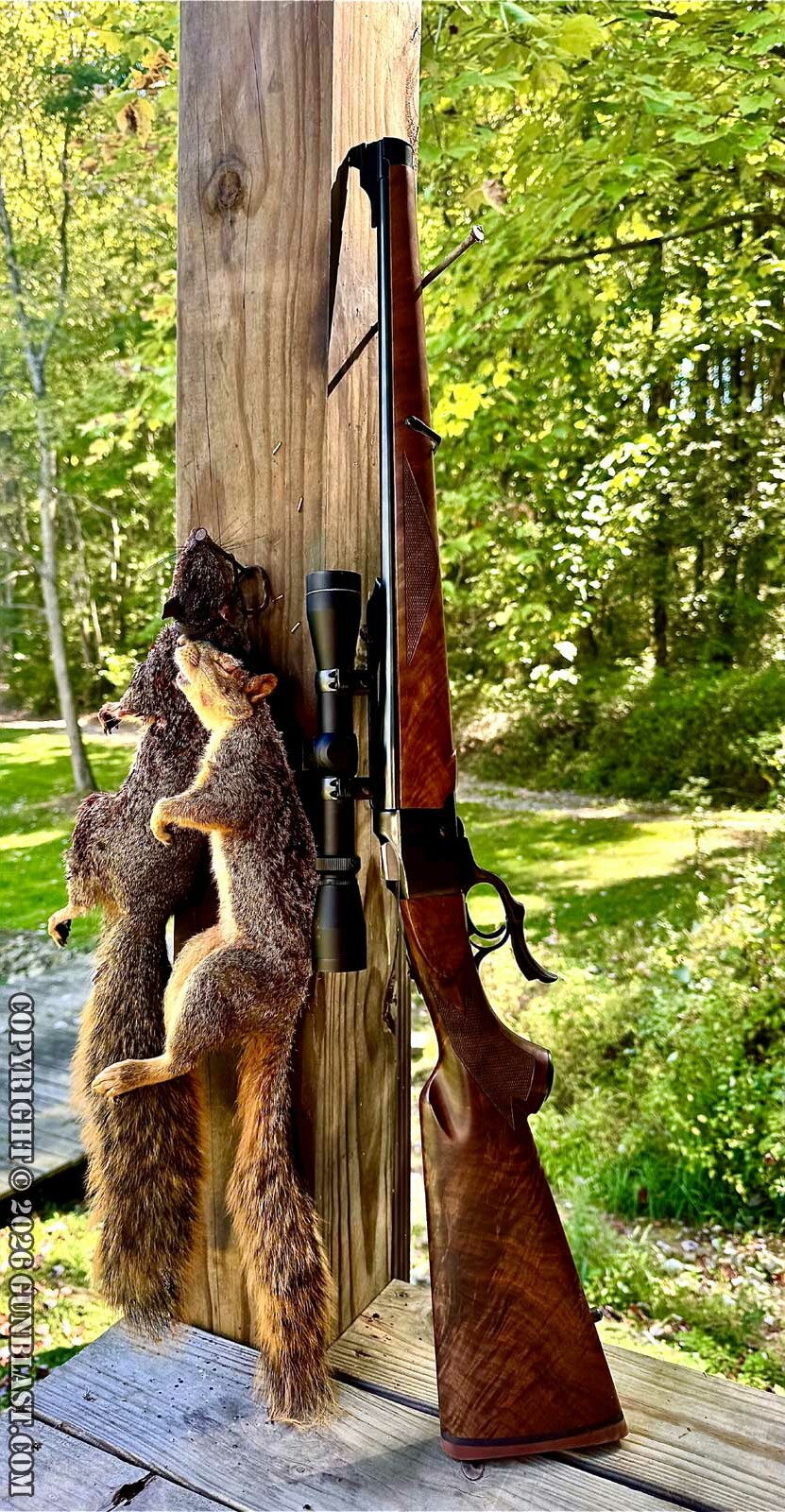
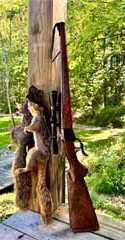
In the Woods! Enamored by the rifle, I thought that I could use its accuracy to hunt squirrels and only take head shots. I re-zeroed with the lower velocity, 46 grain Winchester ammo and headed for the woods. Within an hour I had two squirrels in my game vest and all meat was
useable. The ranges were seventy-seven and ninety-five yards.
Overkill? Yes. Would I recommend the round for squirrels? Probably not, but it has the inherent accuracy to make the kill without destroying meat. However, safety is another issue altogether. Being on my own property and deep in a valley with a good backstop, I knew that I could safely take the shots that I did. That has me thinking about handloading some reduced velocity loads for squirrels to explore the true versatility of the round.
The final product is a stunningly beautiful rifle based on a sixty-year-old design, chambered for a nearly century old cartridge that served our fathers and grandfathers well for decades. It's particularly noteworthy that Ruger is open to unique collaborations like this one and it's commendable that Lipsey's has the creativity and courage to get projects like this one rolling.
Sitting with my back against an oak tree and the No. 1
across my legs right now, I am especially pleased and grateful.
Nick
Rukavina

Got something to say about this article?
Want to agree (or disagree) with it? Click the following link to
go to the GUNBlast Feedback Page.
|
|
Click pictures for a larger version.



|